Achievements of the research unit for tropical plants Study 2021/2020
First: Research Activities:
To achieve the goals of conducting research and studies in the fields related to the plants of tropical areas and assisting the scientific activity (postgraduate studies and research) for the Faculty and university, as well as serving the local community through the applications of research results for the study of tropical plants and their extracts and medical effects, and studies of cell biology and molecular biology and its statement as follows:
Ecophysiology lab
- PhD Thesis: Dr. Abeer Hassan Ali (Lecturer at Department of Botany)
Title: Study of desert Plant-fungal interactions in arid ecosystem
The work is done as follows:
- Master Thesis: Researcher/ Sundusa Nabil Mohamed (Teaching assistant, Department of Botany).
Title: Evaluation of the effect of Rhizobium sp. isolated from leguminous plants in promoting the physiological processes in both leguminous and non-leguminous crops under extreme environmental conditions.
- Master Thesis: Researcher/ Esraa Khaled Abo El-Qasim Mohamed (from abroad)
Title: Eco-physiological study on some desert plants under salinity stress
Biotechnology Lab (1)
The work is done as follows:
- Master Thesis: Researcher/ Islam Refaat Mohamed (Teaching Assistant at Department of Zoology).
Title: Morphological identification and molecular characterization of rats’ helminthic fauna in Aswan, Egypt
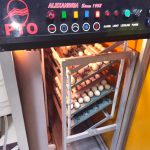
- The lab is equipped with a diversified egg incubator
Biotechnology Lab (2)
It is now working as follows:
- Master Thesis: Researcher/ Dina Abdel-Rahim Al-Amir Abd-Allah (from outside)
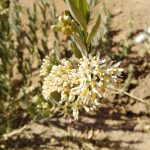
Title: phytochemical studies on Senecio glaucus coronopifolius
The eastern quarter of the greenhouse of (4) + 4 open planting basins with a total area of 100 square meters
It is now working as follows:
Master’s Thesis: Researcher/ Zeinab Jaber Ahmed (Teaching assistant at Botany Department)
Title: Morphological and physiological attributes of okra ( Abelmoschus esculentus L.) breeding cultivars in relation to yield and environmental stress tolerance.
Second: The unit has been equipped with equipment and machinery to ensure the progress of work and achieve the unit’s objectives, as follows:
- A stabilizer for voltage and current with a capacity of 20 kilowatts, equipped, to protect the accurate measuring devices and electrical equipment.
- Mixer capacity of 140 liters to be used in mixing the soil to ensure the mixing of its components.
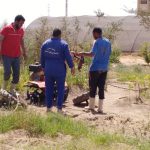
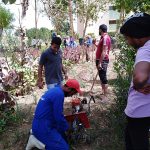
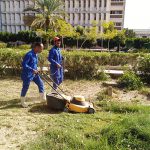
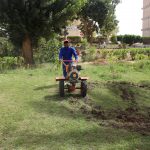
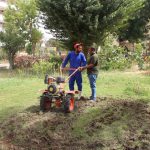
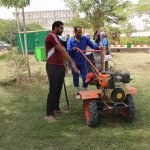
- hoes 2 hp cultivators and training daily laborers to use them in cleaning weeds in greenhouses and open cultivation in the unit.
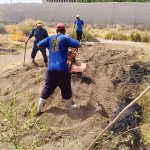
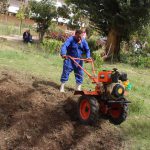
- Plow 11 HP and train daily labor to use it in the work of plowing the soil in greenhouses and open crops in the unit.
- Installing an electric chopper with a capacity of 10 hp, and daily workers were trained to use it in the recycling of tree and garden waste to produce compost.
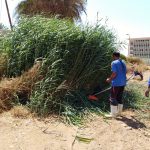
- Gasoline-powered shoulder harvester, and daily laborers were trained to use it in the work of forming fences and getting rid of weeds and linen.
- Electric tree scissors, and daily workers were trained to use them in tree pruning.
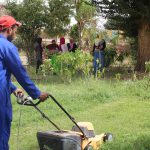
- Electric lawn mower.
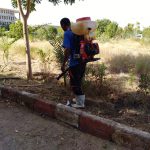
- Gasoline-powered pesticide sprayer, and daily workers were trained to use it in disinfection and pest control.
- 2 Hozrel (1 inch hose) with a length of 30 meters and 4 dry powder fire extinguishers 6 kg. The daily labor was trained to use it in the work of protecting the unit from fire hazards.
- Connecting the Internet 20 points + WiFi to support researchers and operate advanced devices in the research laboratories of the unit.
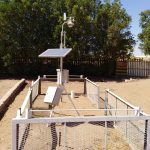
- A meteorological station equipped with a data collector (and a battery charged with solar energy) to record temperatures, relative humidity, wind speed and direction, atmospheric pressure, sun brightness and .. to serve the research objective in the unit.
Third: Infrastructure development and periodic maintenance activities:
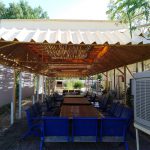
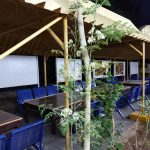
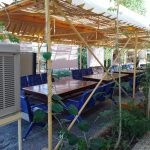
- Developing the canopy attached to the administrative building of the research unit with an area of 100 square meters by completing the canopy structure and covering it with fiberglass (an engineering technical report is attached).
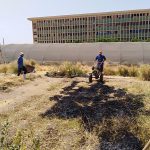
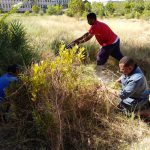
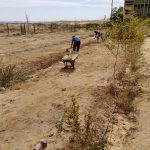
- The back of the unit parallel to the filter with an area of 500 square meters was cleaned by removing fragrant bushes, maple bushes, tamarisk and spraying herbicide to avoid fire hazards.
- Regular maintenance of irrigation systems of all kinds.
Fourth: Activities of using the latest technologies and agricultural methods in the process of producing some strains of plants that are resistant to difficult climatic conditions and have a high economic return:
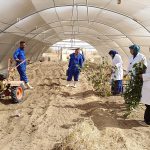
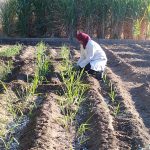
- Planting seedlings resistant to drought and pests in preparation for use as a medicinal plant with an economic return and as an ornamental plant.
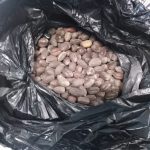
- The seeds of the jojoba plant that are resistant to drought, salinity and pests were obtained from a reliable source. They are trees with high economic returns (seedlings – productive trees), which is the best image of integration between agriculture, scientific research and industry.
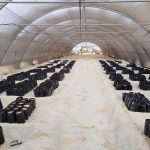
- Greenhouses 1, 2 and 3 are prepared, as well as open crops, to start planting them with jojoba seedlings.
- Seedlings of rare and endangered plants of different types of acacia, lalope and arak trees are planted in the greenhouse (4).
- Aerial laying of Conocarpus trees is also carried out in the fence surrounding the research unit to produce seedlings for the university’s supply.
Fifth: The unit hosted and its staff participated in the framework of scientific cooperation between the unit and research centers and universities in the following activities:
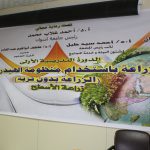
- The course of cultivation using the hydroponic system (cultivation without soil) cultivation of surfaces 2017.
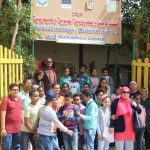
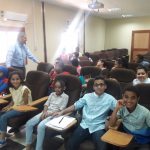
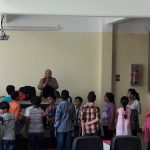
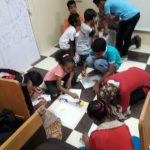
- Hosting Children’s University September 2018.
- Participation with equipment and machines in the roving camp of Faculty of Science February 2018
- Participation with equipment and machines in the roving camp of Faculty of Science in March 2019
- A training course entitled “Bioinformatics System and Data Processing” from 22 to 24 March 2018, in cooperation with Excellence Training Center in the faculty .
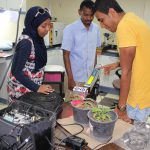
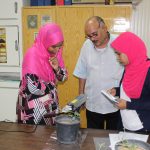
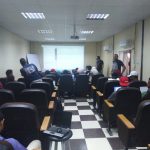
- Hosting a summer training for students of the faculties of engineering and science at the university in the Unit Hall in the basics of open source software within the framework of the existing coordination between the Faculty of Science, Aswan University and the Institute of Information Technology in Cairo, from 18/8/2019 to 6/9/2019.
Hosting biochemistry diploma lectures in Al Wahda Hall every Saturday from 8/6/2019 to 31/9/2019. Within the framework of coordination between Faculty of Science and the research unit.