Aswan customs and traditions in various occasions: –
Feasts in Nubia:
The beautiful Nuba still preserves its heritage and customs in feasts and occasions, and while the conversation in the homes is not without the exchange of the phrase “Kurij Anga Naleh” meaning Happy Eid, the customs of the Nubians differ in Eid al-Adha from those in Eid al-Fitr, and despite the Corona virus that deprived the people of Nubia residing in the north from The celebration of the Nuba train, which departs from Cairo and Alexandria, heading to the Kalabsha and Kom Ombo stations. However, the Nubians still adhere to the habit of spending the feast in the Nuba Nasr Center, each in his own way.
Ayman Fouad, the Nuba deputy in parliament, says that Eid al-Adha has special rituals for the Nubians, as the villages of Nasr al-Nuba center witness a state of alertness to receive the cousins residing in the north, and the baked goods and meals known in the Nuba are prepared before the feast, which the cousins often miss. In addition to preparing for the weddings that may be held during the Eid days, taking advantage of the presence of family and loved ones, he adds that the Nubians are in a state of constant love and longing for the country of gold and sitting with parents and grandparents for continuous communication of the kinship.
And Ahmed Abdel Hamid, “school principal,” speaks, saying: We are all Nubians, and as the late creative Nubian artist Ahmed Mounib sang, “Moshtaqeen Yanas,” we are eagerly awaiting these days, as it is an opportunity for us to gather from every village. The days of the Al-Adha Eid for us are a meeting place through which we exchange visits to express the bonds of love between the villages. On the day of the Arafat stand, the people of each village gather to break the fast together after fasting, then some move at night in groups to exchange congratulations on the advent of the feast. On the morning of the first day of the feast, we start with prayer, then slaughter the sacrifices, and the process of social communication continues throughout the days of the feast by answering the various invitations, while making sure to wear the Nubian dress, young men with robes, and girls with Al-Gergar (Woman clothes).


The Heritage of Al-Besharia during feasts:
The manifestations of the celebration of Eid al-Adha do not differ among the Ababda and Bashariya tribes, no matter how different and how long the distances are. Meals are prepared using tools from the natural environment, and the most important of these meals and drinks are Al-solat from lamb meat, porridge, otom, cheese and Jaburi.
Sheikh Nasr Karrar_ the sheikh of the Bishariya tribes, in Aswan, says that the tribes have preserved the consumption of meat since ancient times, as the meat of the grilled baskets on the embers of the gravel is the “primo” of the Eid al-Adha meals, and it is one of the habits that is not interrupted except for compelling circumstances – such as the “Corona” – Families’ gatherings and their keenness to share meat trays in the dinner meal, and Karrar adds, saying that there are other meals that have a long history, including the “autumn” meal, which is prepared by dipping a quantity of flour in water inside a pot placed on the fire while stirring it constantly, and after it is settled it is added to it Camel milk, as well as among the other famous foods of the Ababda and Bisharia tribes during the first days of the feast is the “Kasra” meal.
And Sheikh Awad Hadl adds, saying: Any table is not devoid of the official and most famous drink of the Al-Basharia and Al-Ababda tribes, which is the “Jabbana” drink, which sits on top of the hot drinks that the people of the “Ababda” and “Al-Basharia” tribes and other tribes inhabit The region, and the “Al-Jabbana” drink is prepared through the process of manual roasting of green coffee and frying it inside a pot made of earthenware until the color of the red coffee turns into a dark brown, and during that a few grains of cloves, cardamom and ginger are added to the coffee according to what the guest requests. To «cheese» a little sugar and then serve the drink in small cups.
The Nubian customs and traditions are distinguished by the peculiarities of distinguishing them from other Egyptian customs and traditions.
The first factor is the Nubian language, which is closed to its people and is not circulated except among its owners only, which limited the existence of strong communication links between them and other people who are closed to the environments surrounding them.
As for the second factor, it is the geographical location and its nature, which played a role in the Nubian’s introversion and lack of contact with the surrounding world. Therefore, his customs and traditions were constant and did not change, due to the absence of interactions with the surrounding communities that would result in a state of influence and vulnerability, with reference to the circumstance of “displacement” that led to Relative change of Nubian customs and traditions,
Some have been displaced and left the geographical location with all its heritage and socialized with other societies that have their own culture, customs and traditions influenced by them directly or indirectly, Some chose the new home, which is not geographically far from the old home of Nubia, but they were unable in light of the new place to preserve all the old heritage.
Nubian weddings:
There are many studies that dealt with the customs and traditions of marriage as practiced by Nubians in their different regions, and these studies varied and came in different scientific levels, and what we emphasize is that the study is based on scientific and methodological foundations, and documenting the folkloric material that it deals with through field work by dealing directly with the narrators reality of the cultural community.
Some of these studies are really specialized, and directly deal with the customs and traditions of marriage and focus on the ceremonial that characterizes the wedding night and before it among the Nubians.
There is diversity, similarity, and difference between the different Nubian groups in relation to the marriage ceremony, due to the different customs in their origins among the Nubians themselves.
The elements of the population in Nubia are divided into three categories, each of them has its own independent customs and traditions, and at the same time the diversity and difference of the custom in its successive details and stages.
The three sections are:
1- Al-Konoz
2- Arab region
3- The Nubian region
There are those who divide the population into two main groups:
1- Alfad Daja (Tanukki), meaning the inhabitants of the West.
2- Al-Konoz (Mtokeh), meaning the inhabitants of the East
Marriage ceremonies have their successive stages up to the last stage, which is the stage of meeting the groom with his bride and the start of married life, which is:
- The ceremony of announcing the approval of the marriage, and it takes place with the bride’s relatives, provided that the groom presents to his bride’s family an agreed amount of money and some clothes that are considered an announcement of the marriage.
- The wedding ceremony that begins in the morning of the wedding day with the groom’s relatives, then moving to the house of the bride’s father at sunset, where the wedding ceremony is completed with the bride’s relatives. This is for Konoz and Nubians.
As for weddings among Arabs, they are more than that:
There is the “external kindness” ceremony, which is the declaration of consent to marriage, and it takes place at the relatives of the bride. The groom gives his bride’s relatives some clothes, as is the case with Konoz and Nubians.
The ceremony (Sheila), which is related to the transfer of the “device” from the groom’s house to the bride’s house, and takes place first with the bride’s relatives when they arrive with the “device” to them.
Ceremony (Night of Henna) and it is held at the relatives of the groom.
The ceremony (the end) that takes place the morning after the henna night in the house of the groom’s relatives, and it is the ceremony during (giving monet as a gift).
Finally, the (wedding night) ceremony takes place at the bride’s relatives
Traditional rituals:
Marriage ceremonies in ancient Nubia:
Marriage celebrations begin after the agreement on Rebat Day in preparation for the marriage contract. A week before the marriage contract, an old woman comes out carrying a wicker dish, inside which is a wooden bowl in which aromatic scents of milk and cloves are placed. An invitation to all the women of the village to go and join the bride’s family in preparation for the joy, and this is considered a legitimate declaration of marriage.
Women and girls go to the bride’s house to help grind corn and wheat, bake and prepare dates and popcorn. These foods are served at banquets to celebrate marriage.
During their work, the women sing songs to the bride and groom, including…
Pamper and calm down in your gait, O of your origin is good
You who come from the island of Saab, swimming
Where there are crocodiles and did not fear
And if this participation on the part of the women is considered an expression of good feelings, then at the same time it is presented in exchange for previous participation on the part of the bride’s family, as is the case with regard to participating in the dance.
Celebration of Henna Night:
On this night, two big celebrations are held, one of which is in the bride’s house and is restricted to her family, while the other celebration is held in the groom’s house, when his friends come to participate in the celebration of singing, dancing and playing the tar.
The celebration begins with a special tradition, which is when one of the elderly women who are forbidden to him, such as his grandmother or aunt, for example, brings a plate of water and henna, and this lady dyes the groom’s body from head to toe. To lose a new robe. And his young friends, especially the unmarried, joke while dyeing it, and he jokes with optimism in order to join him and marry like him, after each one of them takes a piece of henna, paints a part of his body with it, and then bends their hands as well.
Then the process of “giving money as a gift” begins, with the groom sitting in front of him a dish of henna, and on his right one of his friends, who will accompany him throughout the days of joy, holding a whip in his hand, and on his left another holding a sword. These are his guards from envy, jinn, and demons, or his ministers, and among them is the “Sultan.” Two people sit next to the groom, one of whom carries a notebook in which he writes down the money that is paid to the groom and the name of the owner of the money.
After the henna and nicotine ceremony ends, they exchange dinner, and those present perform a male ceremony, then they sing and dance. The celebration may begin with singing and dancing a week before the night of henna.
One of the songs performed on “Henna Night” is this song.
It is from the owner of Halal
Get on boy
And indulge in your walk… and calm down
Get on groom…
Among the songs they sing in the dhikr ceremony are some religious poems recited by the followers of the Sufi Mirghani order
Hello, my eyes are welcome
Hussain’s grandfather, hello
You are a light above a light, hello
Dear parents, hello
Dear parents, hello
Like your good what we saw hello
Hello!
And there is another song
Separate the sherbet
And gather the loved ones
Take our groom
And play the melody of the auctioneer.
In the bride’s house, the same customs, songs and dances are practiced, but in this case the dance is performed by girls and women.
The bride bows and bathes, and the henna remains only on her hands and feet only, as well as for the groom. The girls also participate in dyeing the bride’s body with henna at the same time that the young men do the same work for the groom.

Celebrating the wedding day:
The next day, which is the day of the marriage contract, and after lunch, the same friends and girlfriends who were present at the celebration of the henna night gather together… The groom’s friends go with him to the river in order to take a bath. Before reaching the river, the groom runs and precedes his friends, and each of them is careful not to precede the groom, as the groom is always at The Nubian is the one who surpasses all the young men in everything, and after he comes out of the river, he releases incense, then puts on his new white clothes, and gives the old clothes to one of the elderly who is among the poor, then the groom goes to his house among his friends, and at the house the sheikh of the book in which he learned is waiting for him The groom is a boy, and with the sheikh is a group of young boys studying the Holy Qur’an and religious poems in the book.
Allah Allah Ahmed Habib Allah
Allah Allah Ahmed Habib Allah
Let’s start with the remembrance of Allah
Glory be to Allah, may Allah be glorified
Ahmed Habib Allah
Ahmed Habib Allah
Glory be to Allah, may Allah be glorified
Glory be to Allah, may Allah be glorified
After the jurist or sheikh of the book finishes his religious chanting, the groom’s family presents him with two wicker dishes, one with wheat and the other with dates, and each of the two dishes is covered with a white dablan cloth, which he then sews into a dress.
Then the bridegroom leaves the house accompanied by his friends and the jurists who used to recite the Qur’an to head to the bride’s house. On their way, they must pass through seven neighboring houses, and their way must be from the direction of the bridegroom’s exit from his house. Popcorn and another with dates. And so from one house to another until the seven houses are finished, and as they walk, the women sing to the groom, and some of these songs are:
He is a purebred son
O prayer of the Prophet
And we went to the prophet
in Hijaz
May Allah complete our religion with Hajj
The bridegroom’s friends sing in turn and ask him to walk briskly, staggering and strong like a crocodile. The man is described in his walk as a crocodile and the girl is described as an ostrich. at the Fadja) for his sake and for his bride’s sake.
The celebration is not limited to men only, but women also participate in the celebration of singing, singing and dancing.
One of the well-known dances is the Wastani dance. It consists of a group of women, who line up in a half circle, holding hands, and move in a slow motion, half a step forward, then backward with the right leg, then the left, then they shake with the group right and left, then they advance with their chests in a slight bow. Then one of the women comes forward from the right side and dances in a faster movement. This dance is called the middle dance, as this woman is in the center of the circle, and the men stand and play the tambourines and the women on the other side also in half a circle, and among them are the singers and the repeaters.
This dance is accompanied by a song flirting with the bride, who will move to the diwani, her private room, and will receive her friends there, and so will the groom.
This song is called (Balaja), and it is one of the most famous songs of the Fadja, and many treasures also sing it with a slight change in performance:
You spoiled girl
May Allah bless your morning after a good night
If you are spoiled that I love
I will sit you on the highest chair I have «Gypsy»
You will sit on the “Gypsy”
And I will bring the kohl pot to take it easy
I will vacate the house until we hear back
The ears of Sheikh Muhammad and the voice of the rooster at dawn
I have vacated the Diwani
And I left it for you alone
So sway and spoil me, my beautiful girl, who is spoiled in Diwani
There is no one to share the pampering in the room
No one shares ownership with you
So pamper yourself, my love
The procession continues with songs and dances until they reach the bride’s house, and the bride’s family greets them with ululation. The bride’s family also receives him from the men, and he and his friends enter with them. Then the singing and dancing stops and the traditional ceremonies of the marriage contract begin.


The strangest habits of the people of Nubia:
Nuba is represented by an ancient intellectual and civilized style, and this appears in the strangest customs and traditions of the Nuba people, and from this framework we will show you the most important information that we do not know much about with regard to these customs.
Nubian language:
The languages of the Nile River basin have gone through a great history since the beginning of the hieroglyphic language until it ended in the Arabic language, which has declined in recent periods by modern generations, but the people of Nubia insist on not neglecting it and preserving it and its survival.
As for the Nubian language, it is represented in the original Arabic language, which consists of 24 letters, of which 4 are phonetic letters pertaining to the Nubian language, 17 consonants, 5 vowels, and two letters that have a half vowel.

Nubian houses:
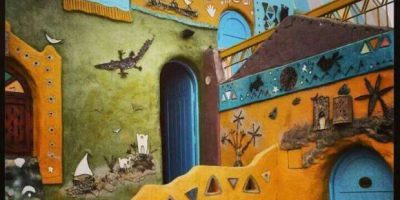
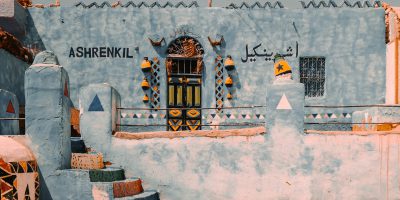
The Nubian houses are built of mud and newspapers, and those ideas they took from the Pharaohs, as they were accustomed to that, and although they are built of mud, they are clean houses free of diseases, as you find in their design calmness and sophistication, where you find in every house openings for ventilation from the top, and when it comes Winter they close those vents.

Behavior of the Nuba people
In addition to the difference in food and language of the Nubian people from the rest of the world, there are also different Nubian customs and traditions, such as the manufacture of “brush” from palm trees, and sometimes it is replaced by mats that are made of plastic.
Among the most prominent customs and traditions of the Nuba people is the baptism of the child on the day of the week, which is an ancient Coptic custom, which includes washing the face of the infant with the waters of the Nile and sprinkling milk there, but these customs disappeared after the Nubians lived away from the Nile.
Nubian dance:
The Nuba people are famous for their love of the Nubian folk dance, which is a group dance in which men and women of all ages participate. There is also a group of dances related to the seasons of cultivation and harvest.

Early marriage:
Early marriage is one of the strangest customs of the Nuba people, and it is spread all over there. A young Nubian man gets married when he reaches the age of 18-22 years, and for a girl, the age of marriage is between 15 and 20 years.
Magic:
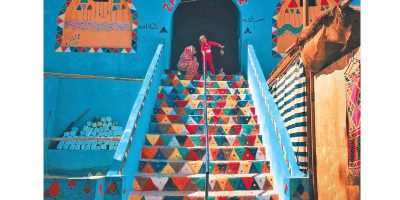
Magic is one of the popular beliefs of the Nuba people, and these beliefs appear in the tattoos and drawings on the walls, which they distinguish with to decorate the facades and entrances of homes, and you also find them through the crafts of beads and decorations.

divorce:
Divorce is one of the things that is hated by the Nubians, but if it occurs, it is in the narrowest limits, and under certain conditions, including; Not having children or being infected with an infectious disease, and if these conditions are not met, no divorce takes place because they sanctify married life.
The most beautiful customs of Nubian art:
The Nuba is distinguished by its love of heritage and art, by drawing the walls and facades of the houses with simple but impressive drawings, spreading joy and psychological comfort, and one of the most rich places in traditional arts is “West Suhail”, and they also love colors such as blue, yellow and green, which refer to the sky and yellow sand, As for triangles, they are due to historical origins.
They also like to mummify animals such as sheep and crocodiles, and this is due to the legends that the Nuba people tell their children and indicate courage.
This was a group of the strangest customs of the Nuba people, with which we enjoyed the beautiful heritage and art, and got to know the Nuba people, who sanctify family relationships based on respect, authentic customs and traditions.