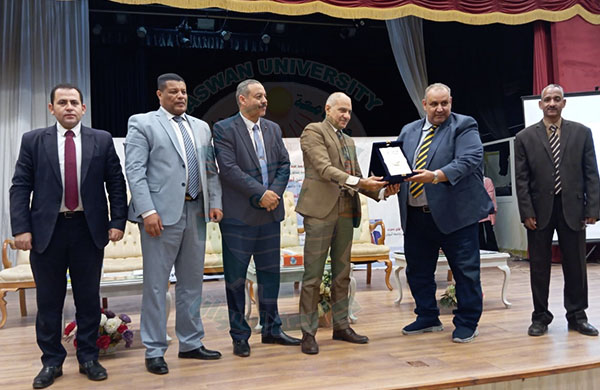
On the sidelines of the Third Economic Forum of Faculty of Commerce at Aswan University, held under the patronage of Prof. Loai Saad El-Deen Nasrat, President of Aswan University, Prof. Omar Salman—Professor of International Economics, former Dean of Faculty of Commerce at Helwan University, Rapporteur of the Permanent Scientific Committee for Economics and Finance, and Head of the Economics Department at the Military Faculty of Administrative Sciences for Armed Forces Officers—made a statement that drew attention to major economic opportunities for Egypt on the African continent.
Prof. Salman stated:
“Africa imports nearly $700 billion annually from around the world, while Egypt’s exports to the continent amount to only $7.5 billion out of Egypt’s total exports of approximately $45 billion.”
This figure reflects a massive trade gap and a yet untapped economic opportunity. According to Salman, Egypt has all the components necessary to expand its exports to Africa by over an additional $25 billion, particularly in light of the growing demand for food products, agricultural goods, chemicals, pharmaceuticals, and building materials.
The Golden List of Egyptian Products in Demand in Africa by 2025:
These products, with high export potential, fall into the following sectors:
- Food and agricultural products, and agricultural crops: Potatoes, onions, citrus fruits, peanuts, sugar, and pasta—high demand in East and West Africa. Also, vegetable oils like corn oil and sunflower oil.
- Construction and infrastructure materials: Iron, cement, ceramics, marble, and granite.
- Chemical products: Fertilizers (urea and nitrates), detergents, hygiene supplies.
- Pharmaceuticals and medical supplies: Generic drugs, medical consumables.
- Ready-made garments and textiles, supported by free trade agreements with African countries.
Prof. Salman also added that the following countries are expected to be Egypt’s most significant export markets in Africa by 2025:
- Sudan: Sugar, medicines, cement, pasta, ceramics.
- Libya: Building materials, furniture, food products.
- Kenya: Fertilizers, electrical devices, sugar—benefiting from the COMESA agreement.
- Nigeria: A massive consumer market needing pharmaceuticals and chemicals.
- Ghana: Clothing, ceramics, cosmetics.
- Tanzania and Uganda: Food, detergents, plastics, medicines.
- Ethiopia and Côte d’Ivoire: Building materials, medical supplies, food products.
Government Support and Agreements Paving the Way.
Prof. Omar Salman emphasized the importance of working simultaneously on several fronts to ensure the success of the export expansion plan, including:
- The African Continental Free Trade Agreement (AfCFTA).
- Export support programs.
- Improving logistical infrastructure: roads, ports, and shipping lines—
to strengthen the role of commercial representation and export councils.