

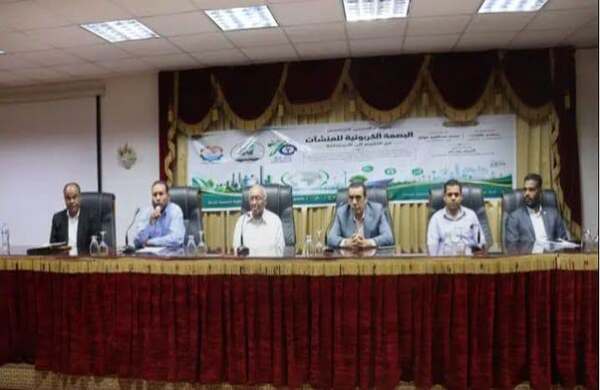
Aswan University has concluded the activities of a specialized training program entitled “Carbon Footprint of Facilities: From Assessment to Sustainability.” The four-day program comprised a total of 20 training hours and was attended by a number of engineers and chemists from the Egyptian Chemical Industries Company (KIMA) in Aswan. The program represents a practical model of the University’s commitment to leveraging academic knowledge and expertise to address environmental and sustainability issues and serve the local community.
The program was held under the patronage of Prof. Mohamed Abdel Aziz Orabi, Acting President of Aswan University, and under the supervision of Prof. Ashraf Imam, Vice President for Community Service and Environment Development, in cooperation with KIMA Aswan, under the supervision of Eng. Sameh Talaat, Executive Managing Director, and Dr. Hegazy Mohamed, Head of the Production Sector at KIMA.
The organization of the program reflects Aswan University’s clear commitment to strengthening its role as a key partner in achieving the Sustainable Development Goals (SDGs) by building human capacities, supporting the transition toward more environmentally efficient industrial practices, and linking scientific research and academic training with the needs of society and the industrial sector. This is particularly aligned with SDG 13 (Climate Action), SDG 9 (Industry, Innovation and Infrastructure), and SDG 17 (Partnerships for the Goals).
Prof. Mohamed Abdel Aziz Orabi, Acting President of Aswan University, emphasized that the University views sustainability as an institutional and societal responsibility rather than merely an academic concept. He noted that Aswan University is working to expand its partnerships with production and industrial institutions in order to translate scientific and research expertise into practical solutions with a direct positive impact on society.
Prof. Orabi explained that training industrial personnel in carbon footprint measurement, emissions management, and emissions reduction represents an important step toward building an industry better equipped to address environmental and climate challenges. He affirmed that the University is committed to playing an active role in the national efforts toward the transition to a green economy and enhancing resource use efficiency
He also pointed out that Aswan University’s location and role in Upper Egypt place an increased responsibility on the institution to support local development by providing scientific expertise, Consultations, and specialized training programs to productive institutions and sectors. Such efforts contribute to improving operational efficiency, enhancing quality of life, and preserving natural resources for future generations.
For his part, Prof. Ashraf Imam, Vice President of Aswan University for Community Service and Environment Development, affirmed that the program is at the heart of the University’s mission toward society and the environment. He noted that it reflects the University’s shift from environmental awareness toward the practical implementation of sustainability concepts.
He explained that the partnership with KIMA represents a model of integration between University and industry, whereby the University provides knowledge and scientific expertise, while industrial institutions provide opportunities to apply this knowledge in the workplace. This creates genuine added value and strengthens the capacity to address environmental challenges.
He added that the University plans to expand, during the coming period, its programs addressing climate change, waste management, energy efficiency, the green economy, and emissions reduction, thereby enhancing Aswan University’s contribution to achieving the Sustainable Development Goals at the local and regional levels.
In the same context, Dr. Hegazy Mohamed, Head of the Production Sector at KIMA, expressed his appreciation for the fruitful cooperation with Aswan University, emphasizing that investment in human capital is one of the most important pillars of industrial development and sustainability.
He explained that the carbon footprint program provides a practical model for integrating academic expertise with industrial application. It also helps employees develop their skills in identifying, quantifying, and managing sources of emissions, thereby supporting KIMA’s efforts to improve environmental performance and promote sustainable practices within the workplace.
Meanwhile, Dr. Mohamed Naguib Rashed, Director of the Environmental Studies Unit at Aswan University, explained that the program aimed to equip participants with a range of practical skills related to calculating and measuring the carbon footprint of facilities, identifying sources of emissions and assessing them, In addition to studying ways to manage and reduce heat.
He added that selecting KIMA as a partner in implementing the program underscores the importance of aligning university training with the actual needs of the industrial sector. He noted that the Environmental Studies Unit, in cooperation with the Sustainable Development and Climate Change Unit at Aswan University, is working to support the University’s efforts to expand capacity-building programs and provide scientific solutions to environmental challenges.
The program featured the participation of a distinguished group of specialized professors and experts, including Dr. Mohamed Naguib Rashed, Director of the Environmental Studies Unit; Dr. Khaled Abu El-Fadl; Dr. Ahmed Negm El-Din Abdo; and Assistant Lecturer Islam Mostafa Yassin.
The program covered several specialized topics, including the concept of the carbon footprint of facilities, identification and assessment of emission sources, methods of calculating and measuring emissions, mechanisms for managing and reducing emissions, as well as practices that enhance environmental performance and support the transition toward sustainability within industrial facilities.
At the conclusion of the program, certificates of completion were awarded to the trainees after they had fulfilled the training requirements, with participants commending the high level of interaction and engagement throughout the program.
